Around 90 minutes west of Kerikeri, the Hokianga offers one of Northland’s most rewarding day trips.
While the Bay of Islands is known for its islands, beaches and maritime history, the Hokianga has a very different character. Here you’ll find dramatic harbour scenery, ancient kauri forests, historic settlements and places of deep cultural significance that tell the story of some of New Zealand’s earliest history.
Whether you’re interested in nature, photography, Māori culture or simply discovering a quieter corner of Northland, the Hokianga is well worth setting aside a full day to explore.
Why Visit the Hokianga?
The Hokianga is one of New Zealand’s most historically significant regions and remains a place where landscape, culture and history are closely connected.
Visitors come to experience:
- Spectacular harbour scenery
- Ancient kauri forests
- Historic waterfront settlements
- Māori history and storytelling
- Scenic coastal drives
- A slower, more peaceful pace of life
Te Hokianga-nui-a-Kupe
The Hokianga is traditionally known as Te Hokianga-nui-a-Kupe, reflecting its close association with the great Polynesian navigator Kupe, who is believed to have first landed here before returning to Hawaiki.
Tāne Mahuta and Waipoua Forest
For many visitors, the highlight of the day is Waipoua Forest.
Home to Tāne Mahuta, New Zealand’s largest known living kauri tree, the forest protects some of the country’s most treasured native giants. Estimated to be more than 2,000 years old, Tāne Mahuta stands as a powerful reminder of the ancient forests that once covered much of the North Island.
The short, easy walk through native bush makes this one of Northland’s most memorable experiences.
Opononi and Ōmāpere
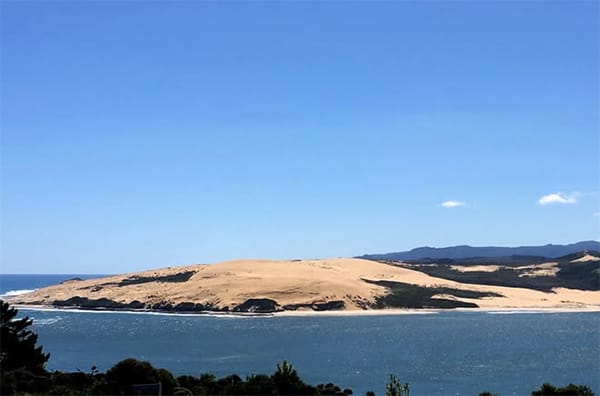
On the southern shores of the harbour, Opononi and neighbouring Ōmāpere offer some of the Hokianga’s finest views.
Across the water, the towering white sand dunes create a constantly changing backdrop, while cafés, beaches and lookout points make these villages ideal places to pause for coffee or lunch.
Opononi is also remembered for the remarkable story of Opo the dolphin, whose friendly visits during the 1950s captured international attention and remain an important part of local history.
Manea: Footprints of Kupe
If you’d like a deeper understanding of the Hokianga, allow time for Manea: Footprints of Kupe.
Through storytelling, film, art and performance, this immersive cultural experience shares the stories of Kupe and the significance of the Hokianga within Māori history. It provides valuable context for many of the places you’ll encounter throughout the region.
Mangungu Mission House
Overlooking the harbour, the Mangungu Mission House is one of Northland’s most important heritage sites.
Built during the 1830s, the mission station later became one of the locations where many Hokianga chiefs signed Te Tiriti o Waitangi.
Today, visitors can explore the restored buildings while enjoying sweeping views across the harbour.
Historic Harbour Villages
One of the pleasures of visiting the Hokianga is exploring its small waterfront settlements.
Rawene, one of New Zealand’s oldest European settlements, is known for its colourful heritage buildings, welcoming cafés and relaxed atmosphere. The vehicle ferry crossing to Kohukohu forms part of the experience, offering beautiful harbour views before arriving in another historic village with a strong artistic community and beautifully preserved timber buildings.
Both villages reward a slow wander and offer a glimpse into a quieter way of life.
History, Heritage and Culture
Throughout the Hokianga, visitors encounter layers of history and culture that extend well beyond the major attractions.
From the traditions of Kupe and the significance of Te Hokianga-nui-a-Kupe to heritage sites such as Mangungu Mission House, historic Rawene and Motuti, the region offers a rich understanding of the people and events that helped shape Northland.
It is this combination of landscape, heritage and living culture that makes the Hokianga such a rewarding destination.
Planning Your Day
There are several ways to explore the Hokianga, depending on your interests.
Option One – First-Time Visitors
- Waipoua Forest
- Tāne Mahuta
- Opononi
- Ōmāpere
- Return to Kerikeri
This route is ideal if your priority is seeing Tāne Mahuta and experiencing the dramatic harbour scenery.
Option Two – History and Culture
- Rawene
- Kohukohu (via the harbour ferry)
- Mangungu Mission House
- Manea: Footprints of Kupe
- Opononi
This itinerary focuses on the Hokianga’s rich Māori and European history while allowing time to explore its charming harbour settlements.
Whichever route you choose, allow a full day. The roads are scenic, there are plenty of places to stop for photographs or coffee, and the journey itself becomes part of the experience.
At a Glance
Distance from Treghan Lodge: Approximately 70 km (around 50 – 60 minutes each way)
Allow: A full day
Best for: Scenic drives, Māori culture, history, photography, nature, peaceful villages, spectacular scenery and beaches
Stay at Treghan
The Hokianga is an easy and rewarding day trip from Treghan Lodge. After a day exploring this remarkable region, return to the comfort of your private guesthouse, where you can relax in peaceful gardens before planning your next Northland adventure.
Continue Exploring
Looking for more ideas? Discover our favourite day trips from Treghan Lodge, including Russell, Mangōnui & Doubtless Bay and Kerikeri, each offering a different way to experience Northland at a relaxed pace.
Frequently Asked Questions
How far is the Hokianga from Kerikeri?
The eastern edge of the Hokianga is around an hour’s drive from Kerikeri, making it an easy day trip for guests staying at Treghan.
Can you visit the Hokianga in a day?
Yes. Many visitors choose to spend a day exploring the harbour, historic settlements, cultural attractions and scenic viewpoints before returning to Kerikeri in the evening.
What is the most famous attraction in the Hokianga?
Tāne Mahuta in Waipoua Forest is one of Northland’s most iconic attractions and a highlight for many visitors to the region.
What is Manea: Footprints of Kupe?
Manea is a cultural experience near Opononi that shares the stories of Kupe and the significance of Te Hokianga-nui-a-Kupe through immersive storytelling, art and film.
Is the Hokianga worth visiting from the Bay of Islands?
Absolutely. The Hokianga offers a very different experience from the Bay of Islands, with dramatic harbour landscapes, ancient forests, rich Māori heritage and historic settlements.
What are the main towns around the Hokianga Harbour?
Popular places to visit include Opononi, Ōmāpere, Rawene and Kohukohu, each offering its own character, history and harbour views.gs.
Can you visit Rawene and Kohukohu on the same day?
Yes. The short vehicle ferry between Rawene and Kohukohu makes it easy to explore both settlements as part of a Hokianga day trip.
What makes the Hokianga unique?
The combination of Māori heritage, the stories of Kupe, ancient kauri forests, historic settlements and the vast harbour landscape creates an experience unlike anywhere else in Northland.